
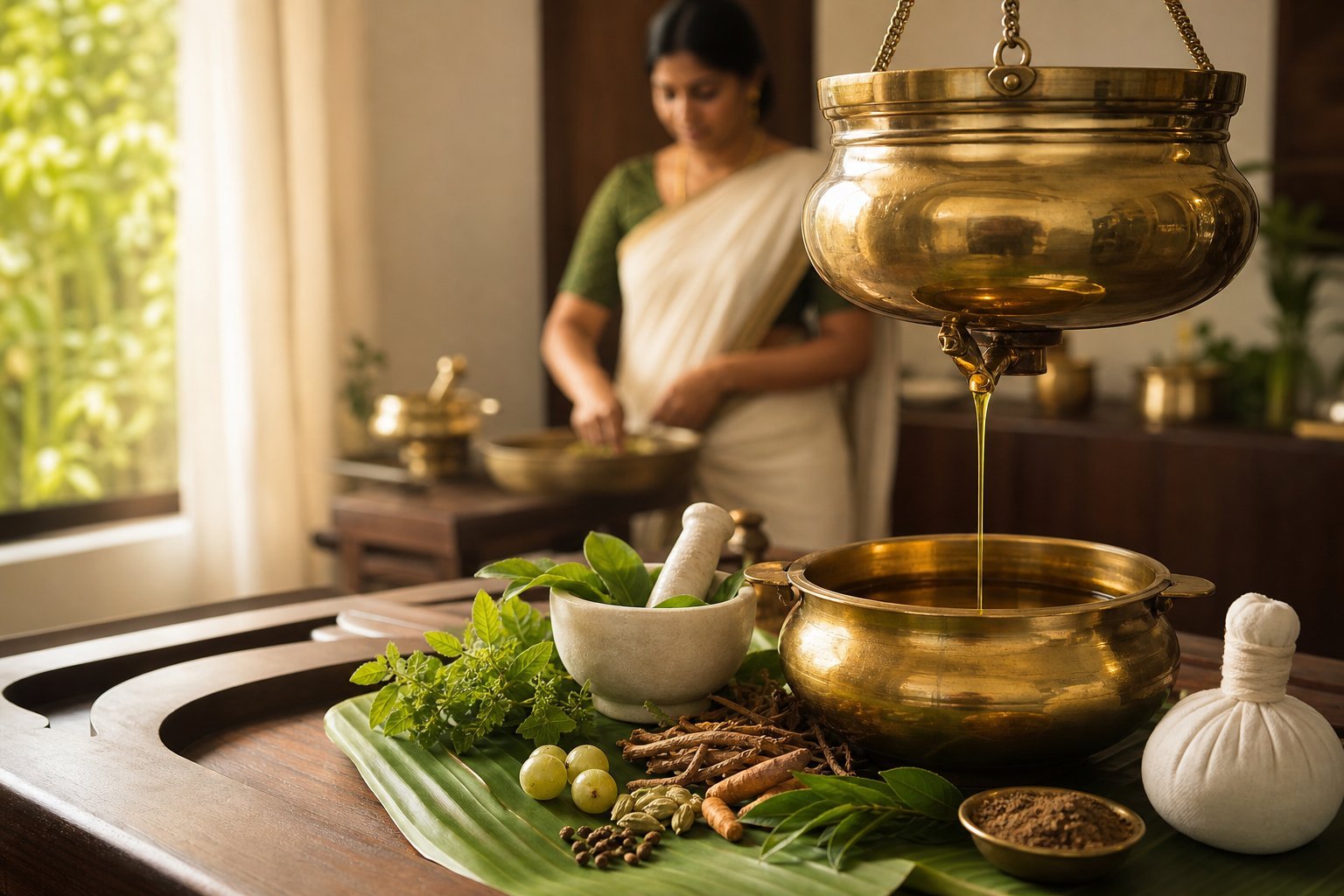
If you have landed here, chances are you are feeling something many of my patients describe in the very first consultation: “Doctor, my reports are almost normal, but I don’t feel normal.” Constant tiredness, bloating, stubborn weight, irregular periods, skin that flares up for no reason, a mind that feels foggy by afternoon. You take a tablet for each problem, and the problems quietly stay.
Modern lifestyle diseases — thyroid imbalance, PCOS, early diabetes, acidity, joint stiffness — rarely arrive because of one single cause. They build up slowly, from years of irregular meals, sitting for long hours, poor sleep and stress. Ayurveda calls this accumulation of undigested, disturbed material in the body Ama and aggravated doshas. And for exactly this situation, our texts describe a systematic deep-cleaning process: Panchakarma (पंचकर्म).
At Shree Vishwshraddha Chikitshalaya in Prayagraj, Panchakarma is not a spa package. It is a medically planned course, designed after examining your Prakriti (body constitution), your condition and your reports. Here is what it actually involves — and five benefits most people searching “panchakarma treatment near me” have never been told about.
What Are the Five Karmas, in Plain Language?
“Pancha” means five and “karma” means procedure. Depending on what your body needs, one or more of these classical procedures is selected — nobody needs all five:
- Vamana (वमन) — therapeutic, medically supervised emesis that clears aggravated Kapha from the chest and stomach. Useful in chronic respiratory, skin and some metabolic conditions.
- Virechana (विरेचन) — a controlled herbal purgation that flushes excess Pitta and toxins through the gut. One of our most-used procedures for skin disease, acidity and hormonal issues.
- Basti (बस्ती) — medicated oil or herbal decoction enemas, considered the single most important therapy for Vata disorders such as arthritis, back pain, constipation and many gynaecological problems.
- Nasya (नस्य) — medicated drops administered through the nose, acting on the head region: sinusitis, migraine, hair fall, poor sleep and mental heaviness.
- Raktamokshana (रक्तमोक्षण) — carefully performed bloodletting (often with leech therapy) to purify the blood in stubborn skin and inflammatory conditions.
Each main procedure is preceded by preparation — internal oleation with medicated ghee (Snehana) and gentle sweating therapies (Swedana) — which loosens deep-seated toxins so they can actually be removed, not just stirred up.
5 Benefits of Panchakarma You Probably Didn’t Know
1. It helps restore hormonal balance
This surprises many women. PCOS, irregular cycles, thyroid sluggishness and even some cases of infertility respond remarkably well when the gut and liver are cleansed and Vata-Pitta balance is restored. In our experience treating women with PCOS and hormonal disorders, a properly done Virechana or Basti course often achieves what months of symptomatic tablets could not — because it addresses the soil, not just the weed.
2. It supports reversal of chronic lifestyle disease
Early diabetes, fatty liver, high cholesterol and hypertension are fundamentally diseases of accumulation. Panchakarma removes that accumulation and then resets digestion (Agni). We have seen patients’ sugar and lipid readings improve meaningfully after a supervised course combined with diet correction — always alongside, never replacing, their physician’s monitoring.
3. It strengthens immunity from the ground up
Ayurveda says immunity (Ojas) is the finest product of good digestion. When Ama is cleared, nutrients are actually absorbed and utilised. Patients frequently report fewer seasonal infections, better energy and faster recovery in the year after Panchakarma.
4. It clears the mind, not just the body
Brain fog, irritability, anxiety and poor sleep often improve dramatically. Nasya and Shirodhara in particular act on the nervous system. Many patients tell us the mental lightness after a course was the benefit they least expected and most valued.
5. It resets metabolism for healthy weight loss
If you have been searching “panchakarma for weight loss” — yes, it helps, but not the way a crash diet does. By correcting Agni and clearing Kapha and Meda (fat tissue) imbalance, the body starts responding to sensible food and exercise again. Weight lost this way tends to stay off, because the metabolism itself has been repaired.
Who Should — and Should Not — Do Panchakarma
Panchakarma suits most adults with chronic lifestyle, skin, joint, digestive or hormonal complaints, and even healthy people wanting a preventive seasonal detox. But it is a real medical procedure, and honesty matters here. We do not advise the main cleansing karmas for:
- Pregnant women (gentler supportive therapies are chosen instead)
- The very elderly or severely weak and underweight patients
- People with uncontrolled heart disease, very high blood pressure or active infections
- Children, except specific mild procedures under supervision
This is precisely why Panchakarma should be taken at a proper Ayurvedic hospital under an MD Panchakarma physician — not as a generic massage package.
What a Course Looks Like at Our Clinic
At Shree Vishwshraddha Chikitshalaya, every course begins with a detailed consultation — pulse examination, Prakriti assessment, and a review of your reports. Based on this, we design a plan that typically runs 7 to 21 days depending on your condition. Most procedures are day-care: you come to our Jhushi clinic (10 AM–2 PM) or Allahpur clinic (5 PM–9 PM), undergo your session, and go home the same day with clear diet instructions. Working patients regularly complete courses without long leave from their jobs.
Follow-up diet (Samsarjana Krama) after the main procedure is not optional — it is what locks in the results, and we guide you through it day by day.
When to See a Doctor
Do not wait for a “detox” if you notice any of these — see a physician promptly:
- Unexplained weight loss, persistent fever or night sweats
- Blood in stool or vomit, or black tarry stools
- Sugar or blood pressure readings that are climbing despite medicines
- Periods absent for over three months without pregnancy
- Severe fatigue with breathlessness or chest discomfort
These need diagnosis first; cleansing comes after we know what we are treating. If you are unsure where your symptoms fit, our symptom checker is a good starting point.
If you have been living on tablets that manage but never resolve, it may be time to treat the root. Message us on WhatsApp at +91 94518 46947 or book a consultation — we will honestly tell you whether Panchakarma is right for you, and which procedures your body actually needs.
Frequently Asked Questions
How many days does a Panchakarma treatment take?
A classical course runs anywhere from 7 to 21 days including preparation and follow-up diet, though shorter targeted plans (for example a 7-day Basti course for joint pain) are common. At our Prayagraj clinics most sessions are day-care, so you do not need admission — you visit daily during clinic hours and return home the same day.
Is Panchakarma good for weight loss?
Yes, when done for the right reasons. Procedures like Virechana and specific Basti courses correct sluggish metabolism and Kapha-Meda imbalance, after which diet and exercise finally start working. In our patients this produces gradual, sustainable weight loss rather than the rebound seen after crash dieting. It is a metabolic reset, not a slimming shortcut.
Can I do Panchakarma while continuing my job?
Usually yes. Many procedures — Basti, Nasya, massage and Swedana — fit into a daily clinic visit at Jhushi (mornings) or Allahpur (evenings). Only the intensive days of Vamana or Virechana need one or two days of complete rest at home. We plan your schedule around your work during the first consultation.